


Fixing East Africa: Kenya’s Serenity Club Helps Supports Youth Escape Social Media Stress

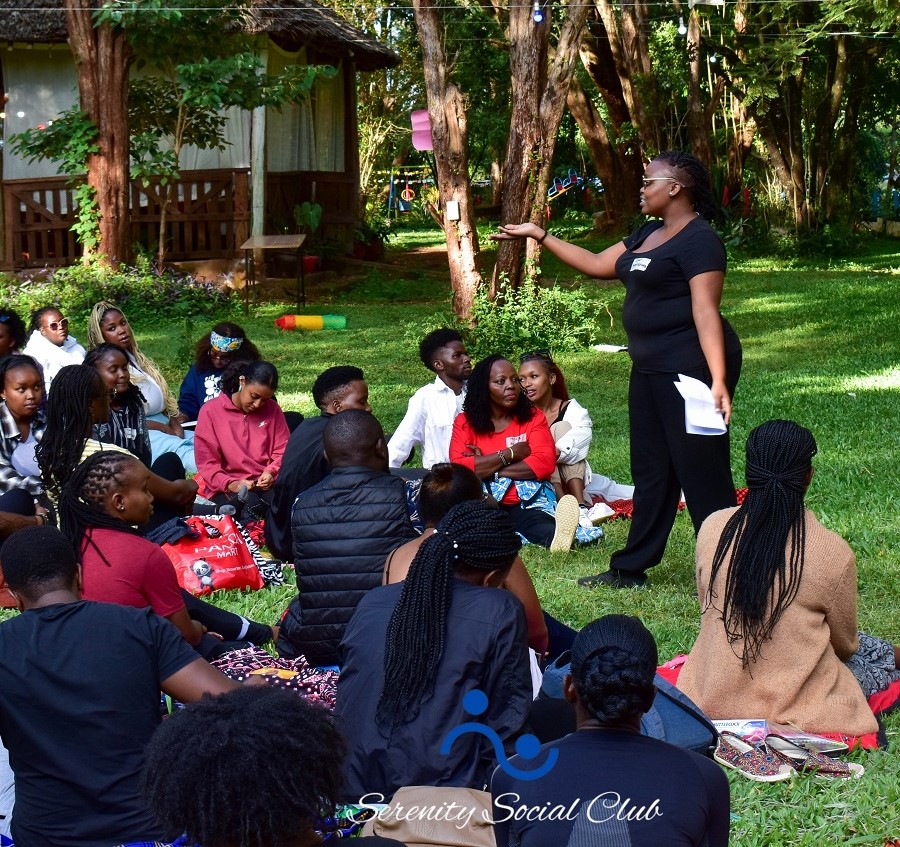

In the bustling heart of Nairobi, where smartphones rarely leave people’s hands and the demands of work, family, and constant digital connection weigh heavily, a new kind of community is quietly taking root.
It’s called Serenity Social Club, and for those who’ve discovered it, it feels like an essential escape.
Meet Stella Wanjiru, the woman behind this growing movement. What started as a deeply personal search for peace has blossomed into a wellness community changing how Gen Z and millennials experience rest, connection, and themselves.
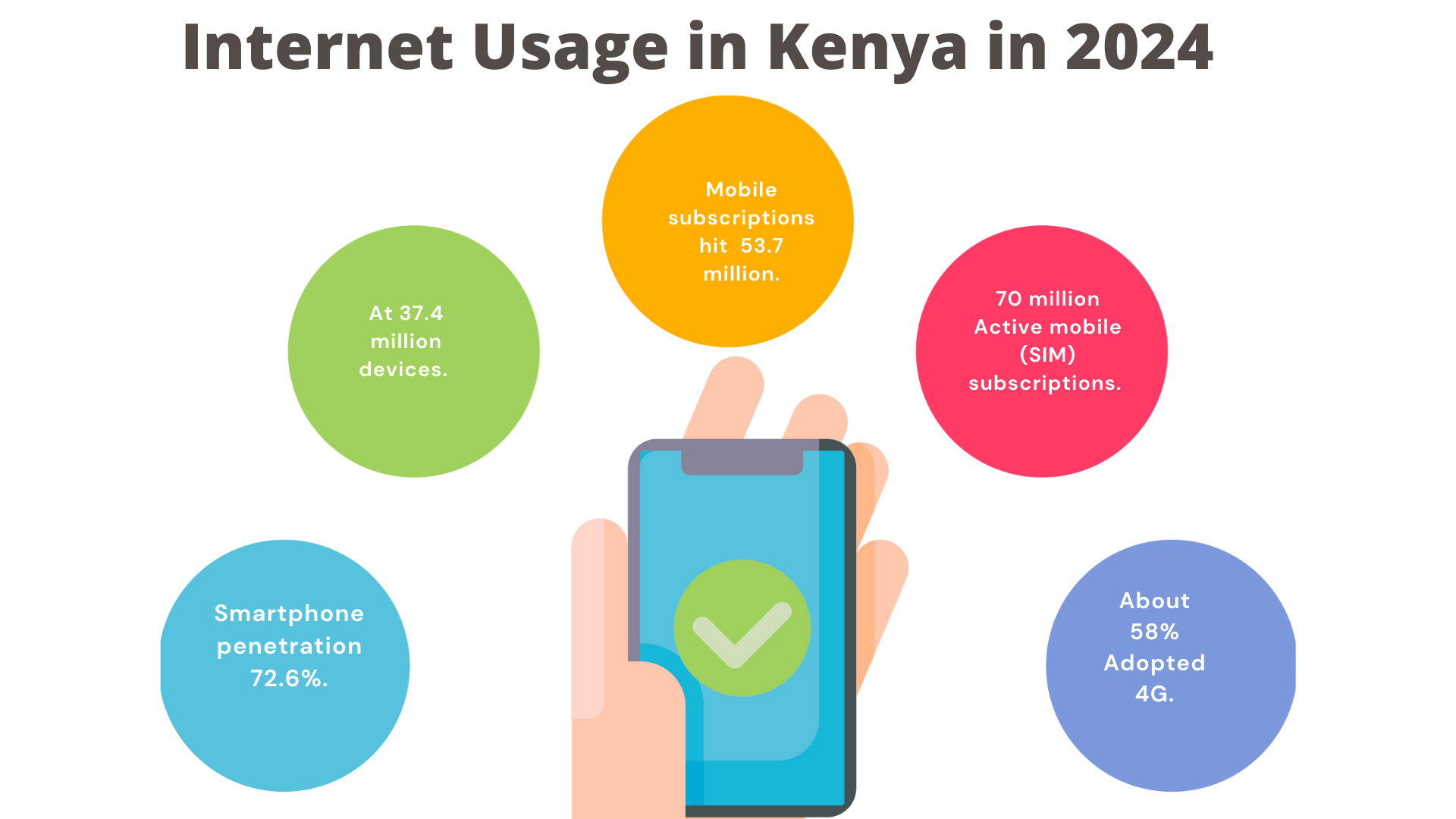
For Wanjiru, the idea was born during a quiet, uncertain season of her life. She had quit the nightlife and party scene she once enjoyed but found herself adrift, unsure where to go or what to do with her weekends. “I didn’t know what else to do,” she recalls. “I was working from home, stuck on my phone or laptop, or watching endless TV shows. It was exhausting. I realized I needed a space where I could just be. Not online, not partying, just present.
With no community offering what she craved, Wanjiru decided to create one.
She began with the concept of digital wellness, recognizing how deeply screens had invaded every part of modern life. “We’re always on our phones. If it’s not our phone, it’s the laptop or the TV. Our minds never switch off,” she explains.

Serenity Social Club would be a place where people could unplug from digital devices and the chaos of urban life and instead reconnect with themselves, nature, and others phone-free.
The first gathering was simple: a no-phones event in a serene natural setting, inviting people to bring a book and a journal. “Some people didn’t get it,” Wanjiru admits with a laugh. “They asked, ‘You want me to come, read, and then what?’ But those who showed up left asking for more.”
The idea quickly gained traction. What started as an intimate gathering of 18 people soon grew. The second event welcomed 60 attendees, and by the third, 150 people RSVP’d, with 96 showing up, a clear sign the community was hungry for spaces like this.
Each event follows a carefully designed flow. Participants arrive mid-morning and start with yoga and breath work, easing into a slower rhythm. Then comes hobby time, a chance to engage in mindfulness activities like reading, crocheting, journaling, coloring, or simply resting under the trees. Grace calls these “hobby pods,” where people can quietly do their own thing in community.
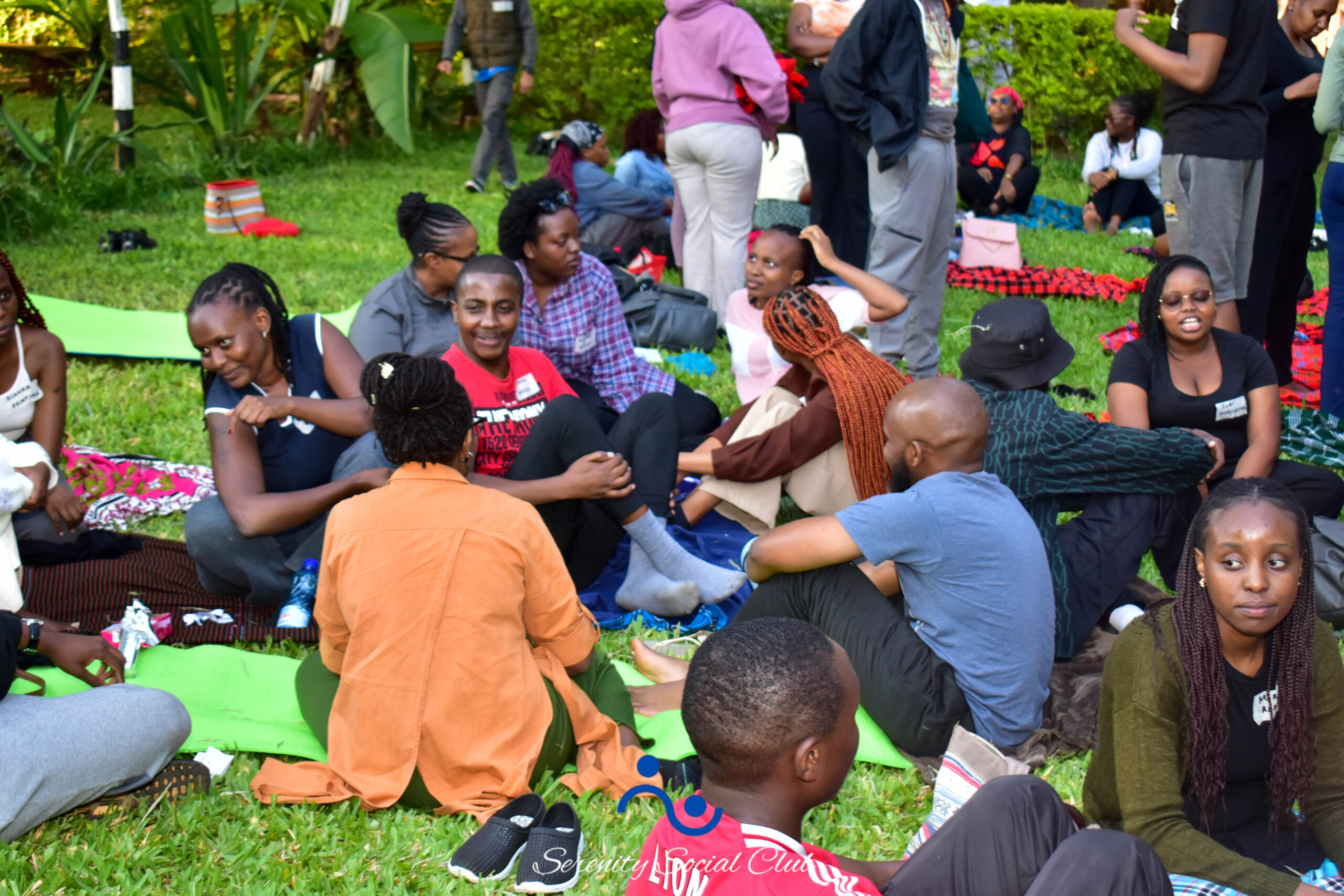
And while it might seem unusual to some, attendees have embraced it. One social worker, constantly dealing with emotionally heavy cases, spoke about how much she valued her time at Serenity. “I was coloring and realized how much I needed this space,” she shared. “It reminded me that in the middle of all the chaos, I could still find calm.”
A rapper based in Nairobi working in digital media admitted the experience of being phone-free for hours was both strange and deeply relieving. “I hadn’t realized how exhausting my phone was until I left it behind for a day,” he told Wanjiru after one event.
These personal stories reflect a wider reality: Kenya’s relentless hustle culture leaves little room for intentional rest. Whether it’s the pressures of a corporate job, the demands of family life, or the constant need to stay visible online, many urban Kenyans are feeling overwhelmed, often without realizing it.
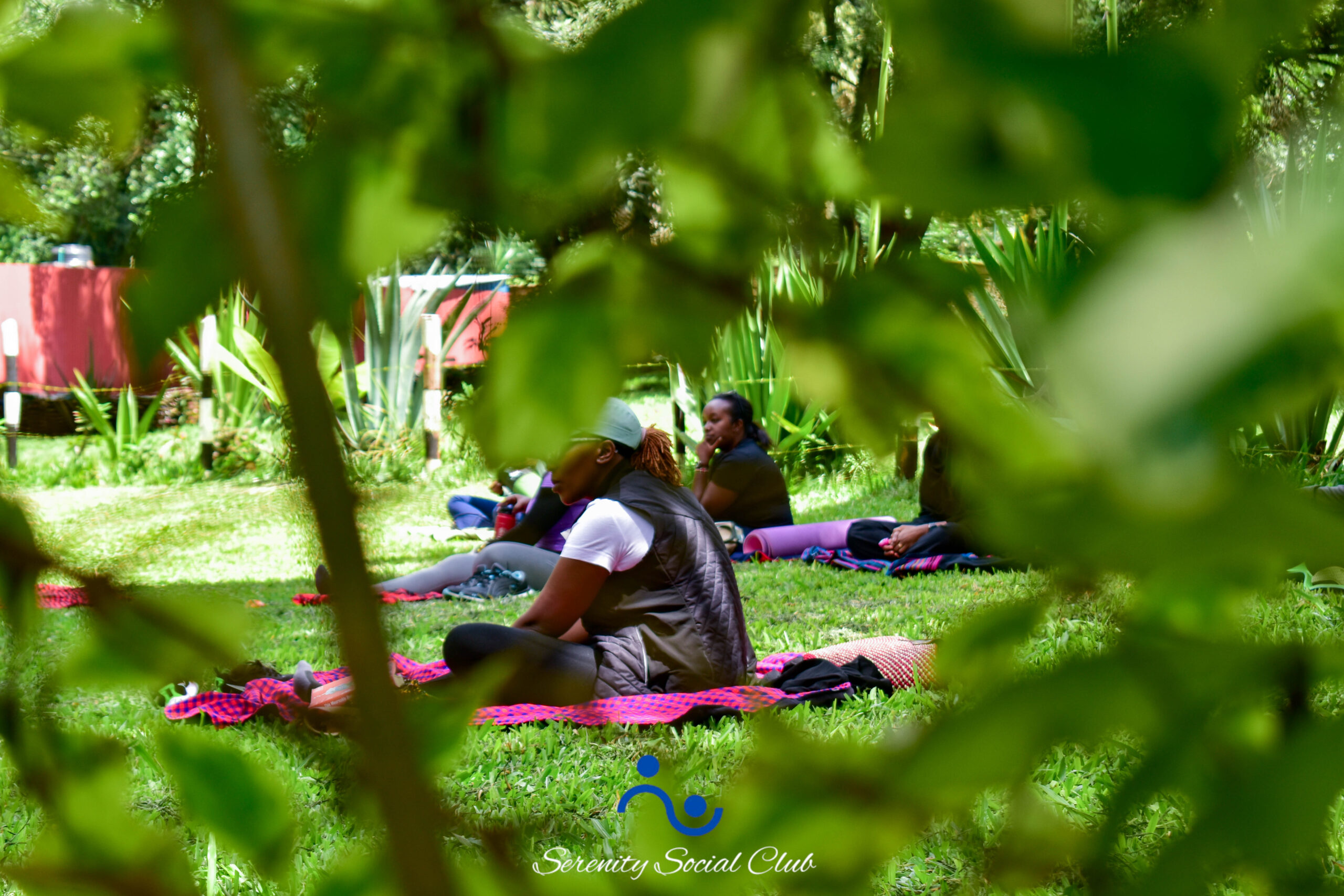
Serenity Social Club offers a remedy/therapy. Beyond digital detoxing, it’s a space where strangers become friends through shared interests. Whether reading under a tree, napping in the grass, or reflecting on a journal entry, the events foster connections grounded in humanity rather than job titles or social status.
“In our events, no one asks you what you do for a living,” says Grace. “You’re not here to pitch or sell. You’re just a person who loves books, or painting, or yoga. That’s enough.”
As the club’s popularity grew, this upcoming July, the club will host another event, where attendees will be encouraged to contribute to make the initiative sustainable. As Wanjiru continues to grow and develop her initiative, she’s exploring ways to make Serenity Social Club a sustainable and impactful community.
Wanjiru envisions even bigger things for the future, including wellness webinars between events and overnight digital detox retreats away from the city. “Our dream is a 24-hour, no-phone, no-noise escape. Just you, nature, and your peace,” she says.
Another noticeable trend has emerged: women make up the majority of Serenity’s participants. Grace notes this isn’t unique to her club but a reflection of how women tend to seek out mental wellness spaces more readily than men. “We keep asking ourselves, where are the men?” she says. “They need these spaces too.”

The numbers speak for themselves, with steady growth and an increasingly diverse audience. Initially dominated by 18- to 34-year-olds, recent events have seen more attendees aged 35 and above joining in. From students navigating university pressures to professionals burnt out from corporate life, Serenity’s reach is expanding.
More than just a club, Serenity is quickly becoming a quiet revolution, a reminder that rest is a radical, necessary act. In a city forever on the move, Wanjiru’s simple idea of spending seven hours without a phone has unlocked something many didn’t realize they needed.
As the community continues to grow, one thing is certain: the power of digital detox and mindfulness can have a profound impact on our lives.